Ginger for Allergies: The Ancient Remedy That Science Is Finally Proving Right
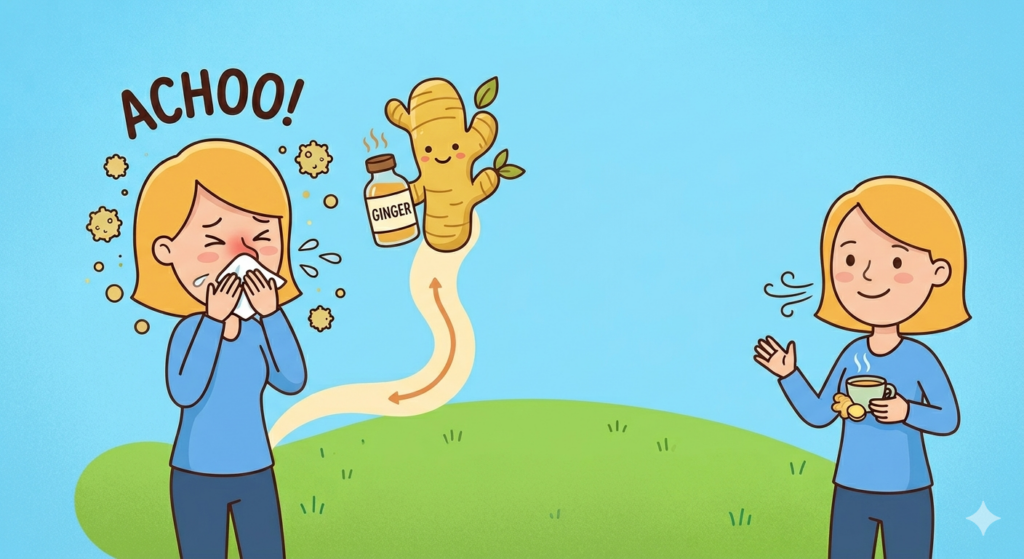
Ginger for allergies is not a new idea. Healers have used this root for thousands of years. But today, modern science is confirming what traditional medicine always knew. Ginger works — and the research explains exactly why.
Sneezing, itchy eyes, a runny nose. If you live with allergies, you know how much they drain your daily life. Most people reach for an antihistamine. But there is a natural, time-tested alternative worth knowing about. That alternative is ginger.
Why Ginger for Allergies Makes Sense

Ginger (Zingiber officinale Roscoe) has a long history in Ayurvedic medicine. Practitioners called it “universal medicine.” That label was not an exaggeration.
Ginger fights allergies, inflammation, nausea, fever, and pain. It also kills disease-causing fungi. Studies suggest it helps prevent stomach ulcers too. These are sores in the stomach lining that cause heartburn, indigestion, and discomfort. Ginger has even shown results in easing menstrual pain. Few plants do so much.
The secret lies in what ginger contains. It carries vitamin C, vitamin B6, magnesium, potassium, copper, and manganese. It also contains powerful polyphenols: gingerols, shogaols, paradols, zingiberene, and zingerone. These are among the most bioactive compounds found in any natural food. They give ginger its antioxidant strength. They also reduce lipid oxidation and ROS formation in the body. Both are linked to inflammation and immune problems.
Ginger for Allergies: What a 2016 Study Found
Researchers at the National Library of Medicine studied ginger and allergic rhinitis in depth. The study — Prevention of allergic rhinitis by ginger and the molecular basis of immunosuppression by 6-gingerol through T cell inactivation — was published in the Journal of Nutritional Biochemistry in January 2016.
Allergies are rising worldwide. The main driver is IgE-mediated hypersensitivity. This is when the immune system overreacts to harmless substances. It triggers sneezing, inflammation, and nasal congestion. The researchers wanted to know if ginger — specifically its active compound 6-gingerol — could stop this reaction.
The results were clear. A diet with just 2% ginger reduced allergic rhinitis symptoms significantly. Mice sneezed less. They had less nasal rubbing. Mast cell infiltration in the nasal mucosa dropped. IgE levels in serum fell too. These are all key markers of allergic response.
At the cellular level, 6-gingerol blocked both Th1 and Th2 cytokines. It suppressed T cell growth. It stopped IL-2 production. In short, it put the brakes on the immune overreaction — before symptoms could take hold.
The conclusion was direct: 6-gingerol suppresses cytokine production for T cell activation. It does this without triggering further immune activity. The result is prevention or relief of allergic rhinitis symptoms.
Ginger does not just mask allergy symptoms. It targets the process that creates them.
Ginger as a Daily Wellness Habit

Allergy relief is just one benefit. Ginger also supports gut health, reduces inflammation, and protects against oxidative stress. It works well every day — not only during allergy season.
Modern life puts stress on the body. Pollution, processed food, and poor sleep all take a toll. Ginger offers gentle, natural daily support. Cultures around the world have trusted it for thousands of years. That trust is now backed by science.
At Remas, we share that respect for ginger. We follow the words of Hippocrates:
“Let food be thy medicine and medicine be thy food.”
Remas “Be Easy” — Ginger and Honey for Daily Wellness
Remas “Be Easy” combines the power of ginger and honey in one daily food supplement. Both ingredients carry centuries of traditional use. Both now have science behind them.
If you want natural support for allergies, digestion, and everyday vitality — Be Easy was made for you.
Remain healthy, wealthy, and wise.
Try Remas “Be Easy” on Amazon or reach out to us at 9900194933.
Disclaimer: Remas “Be Easy” is a food supplement. It does not diagnose, treat, cure, or prevent any disease. It is not a substitute for professional medical advice. Please consult a qualified healthcare provider for any health concerns.