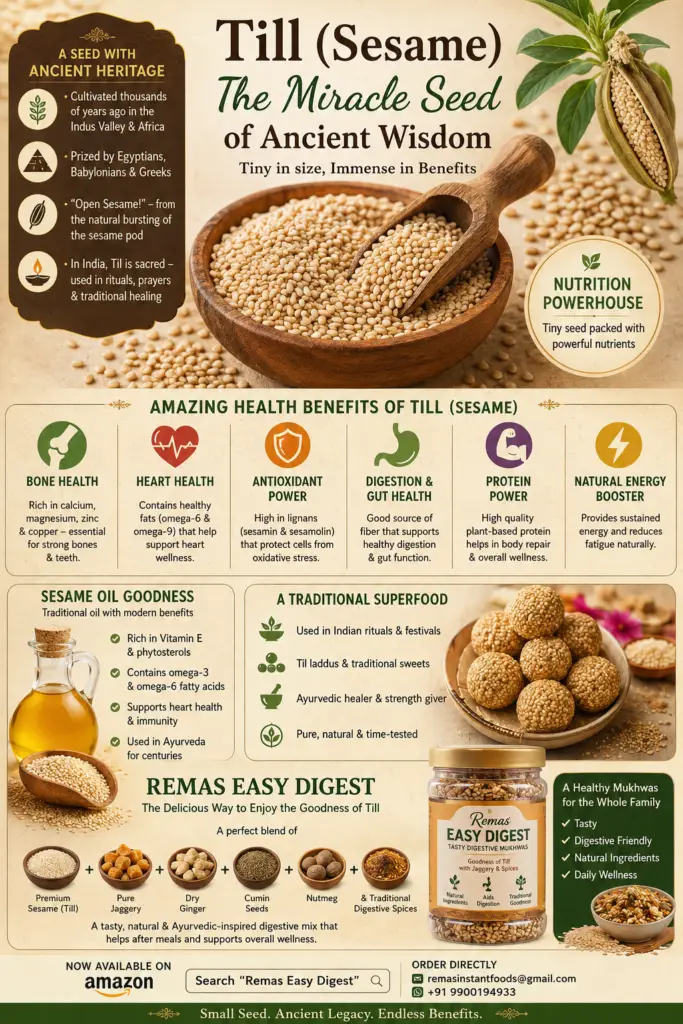
Long before modern nutrition science introduced terms like superfood and functional nutrition, ancient civilizations had already discovered a tiny seed with extraordinary power — Till, also known as Thill or Sesame.Today, modern research continues to highlight the incredible health benefits of till, making sesame one of the most respected natural foods in traditional wellness systems.
Small in size yet mighty in nourishment, sesame seeds have travelled through thousands of years of human history, earning a reputation as the “Miracle Seed” and the “Immortal Seed.”
The Ancient Origins of Till — The Miracle Seed-Health Benefits Of Till
The story of Till miracle seed begins in the fertile lands of the Indus Valley, Mesopotamia, and parts of Africa. Historians believe sesame is one of the oldest cultivated oilseeds known to mankind.
The ancient Egyptians treasured sesame for its medicinal and nutritional value. Babylonians used it to prepare food and wine, while the Greeks valued sesame oil for strength and vitality.
Even the famous magical phrase — “Open Sesame!” — is believed to have originated from the sesame pod itself. When fully mature, the pod bursts open naturally, revealing the precious seeds hidden inside like nature’s treasure
Health Benefits Of Till: Why Sesame Is Called the Miracle Seed
Despite their tiny size, sesame seeds are nutritional powerhouses packed with health-supporting compounds.
Sesame seeds contain beneficial polyunsaturated and monounsaturated fats, including omega-6 fatty acids that support heart health and overall wellness.
2. Powerful Natural Antioxidants
One of the major health benefits of sesame seeds comes from natural lignans such as:
Sesamin
Sesamolin
These antioxidants help protect the body from oxidative stress and support long-term health.
The protein and soluble fiber in sesame help support:
Digestion
Gut health
Blood sugar balance
Better metabolism
These are some of the important benefits of eating sesame seeds daily.
Sesame Oil — Traditional Wellness in Golden Form
Sesame oil, also known as Gingelly Oil or Til Tel, has been used in Ayurveda and traditional Indian cooking for centuries.
It contains:
Vitamin E
Phytosterols
Omega-3 and Omega-6 fatty acids
These nutrients are scientifically linked to:
Better heart health
Improved immunity
Reduced inflammation
Overall wellness support
Because of these properties, sesame oil remains one of the most valued traditional wellness oils in India.
The Challenge with Sesame Consumption
Though sesame is highly nutritious, many people avoid it because of its natural bitterness or because they do not know how to include it regularly in their diet.
That is where traditional wisdom and taste come together beautifully.
Remas Easy Digest — A Delicious Traditional Digestive Mix
At Remas, we have transformed the goodness of sesame into a tasty and easy-to-consume healthy digestive mix inspired by Indian tradition.
Traditional digestive spice This unique combination offers the goodness of sesame and jaggery benefits in one delicious blend.
Unlike ordinary mouth fresheners, Remas Easy Digest is a nourishing traditional Indian digestive mix that supports digestion while preserving the nutritional value of sesame.
Why People Love Remas Easy Digest
✔ Delicious and easy to consume ✔ Made using traditional ingredients ✔ Supports digestion naturally ✔ Contains the goodness of sesame seeds ✔ Natural sweetness from jaggery ✔ Inspired by Ayurvedic wellness traditions
If you are searching for a natural digestive after meals or a healthy mukhwas, Remas Easy Digest is a wonderful choice.
Experience the Timeless Benefits of Sesame
For centuries, sesame has nourished civilizations, supported wellness, and earned its place as one of nature’s greatest gifts.
Now you can enjoy the amazing sesame seeds benefits in a modern and delicious form with Remas Easy Digest.
https;//www.mkgandhi.org“Mahatma Gandhi once said, ‘Refined sugar is like poison to the body.’ He believed that nature provided wholesome sweeteners such as jaggery, rich in nutrients, but that excessive refining removed much of their natural goodness.” Today, modern science is catching up to this wisdom, shedding light on the many jaggery benefits that make it a superior alternative to refined white sugar.
Have you ever wondered why jaggery and sugar, both derived from sugarcane, are viewed so differently?
After all, sugar looks cleaner, dissolves instantly, and is convenient to use. Jaggery, on the other hand, appears dark, rustic, and less refined. If both come from the same source, why do many nutritionists and traditional health systems favor jaggery?
The answer lies in the way they are processed.
The Journey from Sugarcane to Sugar
Both jaggery and white sugar begin as fresh sugarcane juice. However, the manufacturing process takes them down very different paths.
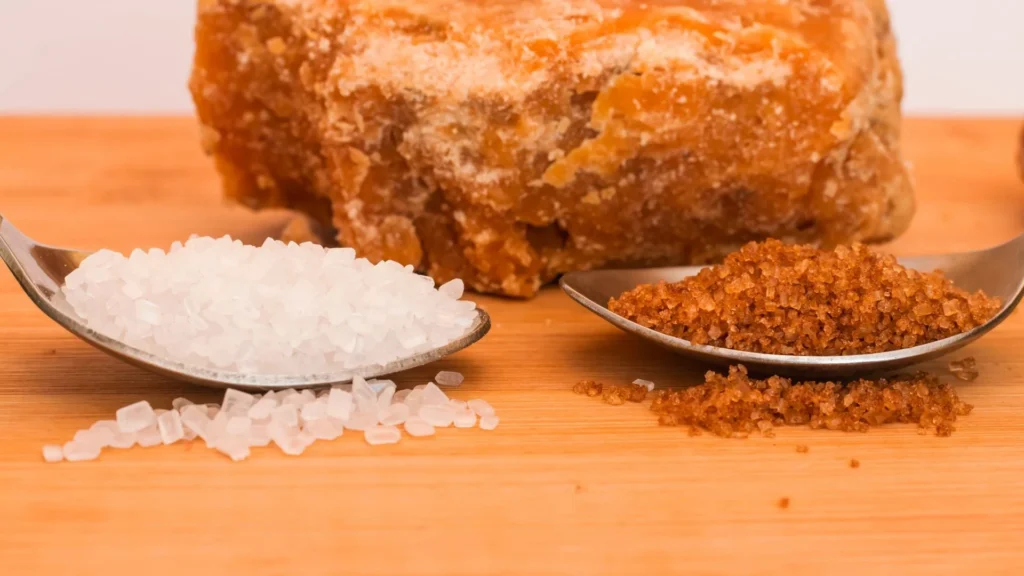
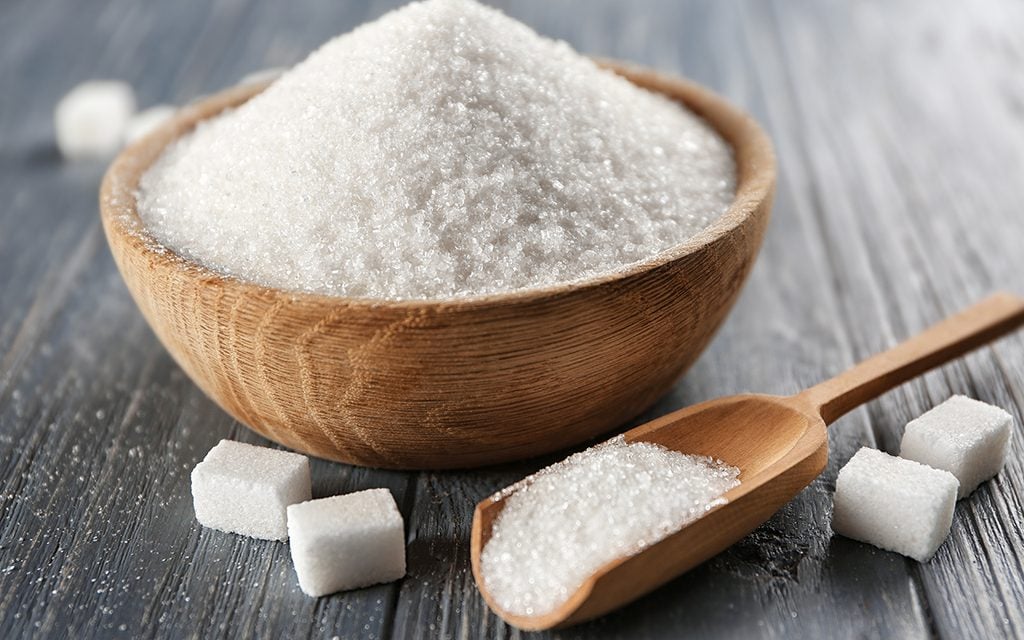
To produce white sugar, the juice undergoes multiple stages of refining, clarification, crystallization, and bleaching. During this process, natural molasses and many of the minerals originally present in sugarcane are removed.
The result is a product that is almost pure sucrose. While it provides sweetness and energy, it contains very few of the naturally occurring nutrients found in sugarcane juice.
Why Jaggery Retains More Natural Goodness
Traditional jaggery production follows a much simpler process. Fresh sugarcane juice is filtered and slowly boiled until it thickens and solidifies.
Because the natural molasses is retained, jaggery preserves many valuable components naturally present in sugarcane, including:
Iron
Calcium
Magnesium
Potassium
Natural antioxidants
Trace minerals
These nutrients contribute to jaggery’s characteristic golden-brown color, rich flavor, and nutritional value.
Traditional wisdom has long regarded jaggery as a healthier alternative to refined sugar. Interestingly, modern scientific research is beginning to support this view. What Modern Research Says About Jaggery
A study published in the International Journal of Chemical Sciences (May 2024) compared jaggery and refined sugar and found significant differences in their nutritional composition and antioxidant activity.
The researchers reported that jaggery contained higher levels of beneficial minerals, chromium, natural phenolic compounds, and antioxidant activity when compared with refined sugar. Because jaggery undergoes minimal processing, many of the naturally occurring nutrients present in sugarcane are retained .According to the study, these characteristics may contribute to better nutritional value and stronger antioxidant support than refined sugar, which is largely devoid of these beneficial components. The researchers concluded that jaggery can be considered a more nutritious sweetening option and encouraged greater awareness of its potential role in healthier dietary practices.
While jaggery should still be consumed in moderation as part of a balanced diet, the study reinforces what generations have known: not all sweetness is created equal.
## Health and Wellness Jaggery Benefits
For generations, jaggery has been valued in Indian households and traditional wellness systems.
Traditionally, jaggery has been used to:
Support healthy digestion after meals
Provide a natural source of energy
Supply dietary iron and minerals
Complement seasonal wellness practices
Add natural sweetness to foods and beverages
While jaggery should still be consumed in moderation, many people prefer it as a less refined alternative to white sugar.
Choosing Quality Matters
The benefits of jaggery depend greatly on its quality and purity.
Unfortunately, some commercially available products may contain additives, artificial colors, or other adulterants. Therefore, it is important to purchase jaggery and jaggery-based foods from trusted manufacturers who prioritize quality and authenticity. The parameters important for high market value and consumer’s acceptability of the jaggery are colour, flavour and shelf life. Hussain et al. (2012) studied the preservation of colour, flavour and shelf life of the jaggery. In order to get light coloured jaggery, sulphur dioxide (SO2) is used as juice clarificant during its preparation, hence, light golden colour jaggery is injurious to health (Uppal et al. 2005) and therefore it is advisable to consume jaggery which is darker in colour.
The Remas Promise
At Remas, we believe that food should not only satisfy hunger but also reflect the wisdom of traditional ingredients.
Inspired by the timeless philosophy of Hippocrates, the father of medicine:
“Let food be thy medicine and medicine be thy food.”
we carefully create products that combine traditional ingredients with modern convenience.
The result is a delicious digestive companion inspired by traditional food wisdom and crafted for modern lifestyles.
Bringing Nature’s Wisdom to Your Table
In a world filled with highly processed foods, sometimes the best choice is to return to simple, time-tested ingredients.
Jaggery reminds us that sweetness can be more than just taste—it can carry the richness of nature’s nutrients and generations of traditional knowledge.
What Is Fever? Illness or Your Body’s Defense System?
What Is Fever? Illness or Your Body’s Defense System?
Feeling chilled, experiencing high temperature, shivering, headaches, muscle aches, dehydration, weakness, or fatigue usually signals the presence of fever.
For many people, the first reaction to fever is simple: visit a medical store and buy paracetamol or another common fever medicine. It has become a routine response.
But have you ever asked yourself: What is fever?
Scientifically, fever is not a disease itself.
What Is Fever Scientifically?
Fever is generally considered a symptom and an adaptive defense mechanism in which the brain’s hypothalamus raises the body’s temperature set point. This process can help stimulate immune activity and make conditions less favorable for certain pathogens.
In simple words, fever may be one of the body’s natural tools for fighting infection.
Understanding what fever is can change the way we think about illness and recovery.
Is Fever Helping the Body?
This raises an important question:
If fever is helping us, should we always try to suppress it immediately?
Research suggests the answer may not always be yes.
As discussed in a BBC article titled “Should You Always Treat a Fever? The Symptom That Puzzled Doctors for Millennia” (23 October 2025), some experts suggest that mild fever may sometimes be allowed to run its course because it can contribute to the body’s immune response.
Professor Mauro Perretti noted:
“In the case of mild fevers, it can be better in some circumstances to let them do their job.”
This perspective helps us better understand what fever actually does inside the body.
When Should Fever Be Treated?
However, context matters.
Fever-reducing medicines can relieve discomfort and may be important in many situations. High fever, persistent fever, severe symptoms, young children, older adults, and people with medical conditions often require medical guidance.
The message is not to avoid medicines.
The message is this:
Remember, fever is usually a symptom — not the illness itself.
Rather than automatically treating yourself based only on temperature, try to understand what may be causing the fever and seek professional medical advice when needed.
The 24-Hour Fever Rule
Health professionals commonly recommend the 24-hour fever rule, which states that individuals should remain at home until they have been fever-free for at least 24 hours without using fever-reducing medications such as paracetamol, acetaminophen, or ibuprofen.
In addition, returning to work, school, or other public activities should only occur when overall symptoms are clearly improving. This simple precaution helps reduce the spread of infectious illnesses and protects the health of others.
What Is Fever Trying to Tell You?
Sometimes the goal is not simply to lower the temperature — but to understand what your body may be trying to communicate.
Understanding what fever is may help people make more informed and balanced decisions about health and recovery
A Thought to Remember
“Natural forces within us are the true healers of disease.” — Hippocrates
Fever is not always an enemy to be defeated immediately. In many cases, it is evidence that the body’s remarkable defense system is actively working to protect us. While persistent or severe fever should never be ignored, understanding its purpose can help us respond more wisely and responsibly.
Listen to your body. Treat the cause, not just the temperature.Be Healthy. Be Safe. — Remas
Disclaimer: This article is intended for educational and informational purposes only and should not be considered medical advice. Always consult a qualified healthcare professional regarding any medical concerns, diagnosis, or treatment.
Jaggery vs sugar — it sounds like a simple comparison. Both come from sugarcane. Both taste sweet. So why does one nourish your body while the other leaves it empty? The answer comes down to one thing: what happens during processing.
Jaggery is an unrefined, nutrient-rich sweetener that comes from sugarcane juice or date palm juice. Traditional wellness systems have called it a “medicinal sugar” for centuries. Studies suggest it aids digestion, helps prevent anaemia, boosts immunity, works as a natural detoxifier, and releases energy more slowly than white sugar — though it still carries a high caloric load. White sugar, in contrast, goes through heavy industrial processing. As a result, what starts as natural cane juice ends up as 99% pure sucrose — empty calories with nothing useful left for your body.
Mahatma Gandhi understood this well. He once said: “Refined sugar is like poison to the body.” He believed nature gave us wholesome sweeteners like jaggery, full of nutrients. However, when we refine them into white sugar, only empty sweetness remains.
Jaggery vs Sugar: What Processing Actually Does
Both jaggery and white sugar start from the same source — sugarcane juice, or sometimes palm sap. However, what happens next is where everything changes.
To make white sugar, manufacturers first clarify the juice using lime, sulphur dioxide, and phosphoric acid. Next, they remove the molasses — the dark, mineral-rich part — through repeated boiling, crystallisation, and spinning. Finally, they bleach and whiten the crystals. As a result, the final product is 99% sucrose. Minerals like magnesium, calcium, and potassium disappear completely. Heat and refining also destroy B vitamins. In the end, what remains has zero fibre, zero minerals, and no antioxidants. It looks pure, but it is nutritionally empty.
Jaggery, on the other hand, takes a far simpler path. Makers filter the cane juice, boil it, and thicken it — all without chemical refining. Because of this, the molasses stays intact. The juice solidifies naturally into its golden-brown form, keeping its minerals and trace nutrients alive.
What Jaggery Actually Contains
Because jaggery skips chemical processing, it holds on to everything that white sugar throws away. Here is what you actually get:
Iron — partly from the iron pans used in making it, iron helps prevent anaemia
Calcium and magnesium — both support bone strength and nerve health
Potassium — helps keep blood pressure in balance
Antioxidants and plant compounds — support immunity and reduce oxidative stress
Molasses — gives jaggery its brown colour, minerals, and rich taste
Trace B vitamins — present in small amounts; refining destroys these completely in white sugar
This is why jaggery looks rough, brown, and uneven. That is not a flaw. In fact, it is proof that nothing has been removed.
So Why Does White Sugar Still Win on Supermarket Shelves?
White sugar dissolves faster, handles more easily, looks cleaner, and lasts longer on the shelf. It is also cheaper to make in large quantities. These are useful advantages for manufacturers. However, they are not health advantages for you. The clean white appearance is entirely artificial — manufacturers create it by removing everything that made the original plant valuable in the first place.
All that glitters is not gold. A product that looks pure is not necessarily better for your body.
A Word of Caution — Not All Jaggery Is Equal
Before you switch to jaggery, there is something important to know. In recent years, manufacturers have added fillers and artificial colour to jaggery products to cut costs. As a result, buying from an unverified source means you may not get the benefits you expect. Therefore, the quality of the brand matters just as much as the ingredient itself.
This is exactly why choosing a trusted source is so important. When the ingredient is honest, the benefits follow naturally.
Remas “Be Easy Digest” — Jaggery Done Right
At Remas, we bring nature’s wisdom to every spoon. Remas Be Easy Digest combines pure jaggery with til (sesame) and added masala — a simple, honest blend rooted in tradition and free from unnecessary additives.
As Hippocrates, the father of medicine, once said: “Let food be thy medicine and medicine be thy food.”
That belief sits at the heart of everything we make.
Disclaimer: Remas Be Easy Digest is a food supplement intended to support general wellness. It does not diagnose, treat, cure, or prevent any disease. Please consult a qualified healthcare professional for specific medical concerns.
Lorem ipsum dolor sit amet, consectetur adipiscing elit. Ut elit tellus, luctus nec ullamcorper mattis, pulvinar dapibus leo.
“When nutrition matters, nature weighs heavier than refinement.”
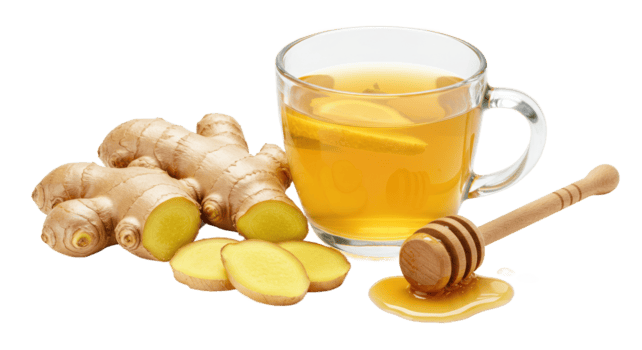
Long before wellness became an industry, it was a habit. In households across India, ginger and honey were kitchen staples — not because of a trend, but because generation after generation found they worked. Ayurveda recognised their value centuries ago. Today, modern research is beginning to explore what traditional wisdom has known all along: ginger and honey, together, are a genuinely powerful combination for everyday wellness.
Why Ginger and Honey Work So Well Together
These two ingredients complement each other naturally. Ginger brings warmth and active plant compounds. Honey brings nourishment and acts as a natural carrier, helping herbal ingredients blend smoothly and absorb more easily. Together, they have been used for centuries to support digestion, soothe the throat, and maintain everyday vitality.
Ginger — The Golden Root of Traditional Wellness
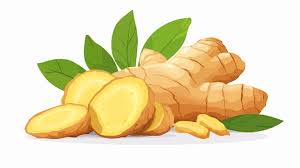
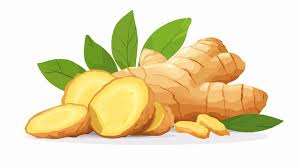
Ginger has been a cornerstone of traditional medicine for thousands of years. Its active compound, gingerol, gives it its characteristic warming quality and is responsible for many of its wellness properties. Traditionally, ginger has been used to support digestion, provide seasonal comfort, promote respiratory wellness, and help maintain overall vitality. Its warming nature makes it especially popular during monsoon season and colder months — times when the body needs a little extra support.
Honey — Nature’s Sweet and Nourishing Gift
Raw, natural honey is far more than a sweetener. It soothes the throat, provides natural energy, supports digestion, and has been used for centuries to complement herbal wellness preparations. Honey’s role as a natural carrier is particularly valuable — it helps active ingredients from herbs like ginger reach the body more effectively, making the combination stronger than either ingredient alone.
What Modern Research Is Finding
Scientific interest in ginger and honey is growing. A study published in the International Journal of Basic and Clinical Pharmacology explored the effects of a honey and ginger mixture in paediatric patients experiencing productive cough. The findings were encouraging — the combination showed meaningful improvement in symptoms with minimal adverse effects compared to conventional cough syrups. The researchers noted that the honey and ginger blend was generally well accepted and showed promising supportive benefits.
Traditional remedies are not a replacement for professional medical care. But findings like these highlight why natural wellness-supporting ingredients deserve serious attention.
“Let food be thy medicine and medicine be thy food.” — Hippocrates
That belief has guided healers for millennia. It guides us too.
Not All Products Are Equal — Choose Wisely
The wellness market is full of products making big promises. Not all of them deliver. When choosing a honey ginger product, look for honest ingredients, no unnecessary additives, and a brand that is transparent about what goes into the bottle. The best wellness products do not overclaim. They simply support your body with what nature already provides.
Introducing Remas Be Easy — Honey Ginger Elixir
At Remas, we do not believe in exaggerated promises. We believe in honest ingredients, mindful nourishment, and daily wellness rituals that fit naturally into life. That is why we created Remas Be Easy – Honey Ginger Elixir — a thoughtfully crafted blend designed to support your everyday wellness, simply and naturally.
How to take it for best results: Mix three teaspoons of Be Easy into one glass of warm water (not boiling). Stir thoroughly — honey tends to settle at the bottom if not mixed well. Take it in the morning on an empty stomach. Avoid tea or coffee immediately after. Wait two hours before breakfast. You can also take it before travel for digestive comfort.
Small daily habits create meaningful long-term change. This is one worth starting.
Disclaimer: Remas Be Easy is a food supplement intended to support general wellness. It is not intended to diagnose, treat, cure, or prevent any disease. Individuals with specific medical conditions should consult a qualified healthcare professional before use.
Ginger for allergies is not a new idea. Healers have used this root for thousands of years. But today, modern science is confirming what traditional medicine always knew. Ginger works — and the research explains exactly why.
Sneezing, itchy eyes, a runny nose. If you live with allergies, you know how much they drain your daily life. Most people reach for an antihistamine. But there is a natural, time-tested alternative worth knowing about. That alternative is ginger.
Why Ginger for Allergies Makes Sense
Ginger (Zingiber officinale Roscoe) has a long history in Ayurvedic medicine. Practitioners called it “universal medicine.” That label was not an exaggeration.
Ginger fights allergies, inflammation, nausea, fever, and pain. It also kills disease-causing fungi. Studies suggest it helps prevent stomach ulcers too. These are sores in the stomach lining that cause heartburn, indigestion, and discomfort. Ginger has even shown results in easing menstrual pain. Few plants do so much.
The secret lies in what ginger contains. It carries vitamin C, vitamin B6, magnesium, potassium, copper, and manganese. It also contains powerful polyphenols: gingerols, shogaols, paradols, zingiberene, and zingerone. These are among the most bioactive compounds found in any natural food. They give ginger its antioxidant strength. They also reduce lipid oxidation and ROS formation in the body. Both are linked to inflammation and immune problems.
Allergies are rising worldwide. The main driver is IgE-mediated hypersensitivity. This is when the immune system overreacts to harmless substances. It triggers sneezing, inflammation, and nasal congestion. The researchers wanted to know if ginger — specifically its active compound 6-gingerol — could stop this reaction.
The results were clear. A diet with just 2% ginger reduced allergic rhinitis symptoms significantly. Mice sneezed less. They had less nasal rubbing. Mast cell infiltration in the nasal mucosa dropped. IgE levels in serum fell too. These are all key markers of allergic response.
At the cellular level, 6-gingerol blocked both Th1 and Th2 cytokines. It suppressed T cell growth. It stopped IL-2 production. In short, it put the brakes on the immune overreaction — before symptoms could take hold.
The conclusion was direct: 6-gingerol suppresses cytokine production for T cell activation. It does this without triggering further immune activity. The result is prevention or relief of allergic rhinitis symptoms.
Ginger does not just mask allergy symptoms. It targets the process that creates them.
Ginger as a Daily Wellness Habit
Allergy relief is just one benefit. Ginger also supports gut health, reduces inflammation, and protects against oxidative stress. It works well every day — not only during allergy season.
Modern life puts stress on the body. Pollution, processed food, and poor sleep all take a toll. Ginger offers gentle, natural daily support. Cultures around the world have trusted it for thousands of years. That trust is now backed by science.
At Remas, we share that respect for ginger. We follow the words of Hippocrates:
“Let food be thy medicine and medicine be thy food.”
Remas “Be Easy” — Ginger and Honey for Daily Wellness
Remas “Be Easy” combines the power of ginger and honey in one daily food supplement. Both ingredients carry centuries of traditional use. Both now have science behind them.
If you want natural support for allergies, digestion, and everyday vitality — Be Easy was made for you.
Disclaimer: Remas “Be Easy” is a food supplement. It does not diagnose, treat, cure, or prevent any disease. It is not a substitute for professional medical advice. Please consult a qualified healthcare provider for any health concerns.
For thousands of years, honey has been far more than a sweetener. Civilizations across the ancient world treasured it as a symbol of nourishment, vitality, healing, and longevity — and for good reason. From the mythological halls of Mount Olympus to Ayurvedic medicine to modern clinical research, honey has earned its place as one of nature’s most respected and celebrated foods.
In Greek, the word nectar literally means “victory over death.” In Latin, it was known as the drink of the gods. Ancient Greek literature — including Homer’s Iliad and the Odyssey — describes the Olympians consuming honey as their sacred food. Aphrodite, goddess of love and beauty, was said to use honey and beeswax in her beauty rituals. And when Alexander the Great died in 323 BCE, historical accounts suggest his body was transported immersed in honey all the way from Babylon to Macedonia, preserving it across the long journey home. Honey was considered so precious that it served simultaneously as currency, offering, and medicine.
A Symbol Across Every Civilization
Throughout history, honey has symbolized fertility, prosperity, happiness, well-being, and abundance. The bee itself became a universal emblem of discipline, harmony, and prosperity across cultures. The ancient Greeks regarded honey as a divine gift, and many civilizations treated it with deep reverence — not as something ordinary, but as something sacred.
Revered in Spiritual Traditions Around the World
Honey holds an honored place in virtually every major faith and wellness tradition on earth. In Hindu practice, honey — called Madhu — is considered sacred and pure, and is one of the five ingredients in Panchamrita, the holy offering used in worship and ritual. In Ayurveda, honey is classified as a Yogavahi: a substance believed to enhance the effectiveness of herbs and support the natural balance of the body.
In Christian, Jewish, Muslim, and Buddhist traditions alike, honey appears as a symbol of divine nourishment and blessing. Spiritual teacher Sadhguru also describes honey as a remarkable natural food traditionally valued for supporting vitality and mental alertness.
What Modern Science Confirms
Traditional wisdom and modern research point in the same direction. Conventional medicine recognizes honey for its antioxidant properties, antimicrobial activity, soothing effects on the throat, supportive benefits in wound care, and natural relief from coughs. It is widely respected as a valuable functional food — not a cure, but a genuinely powerful natural ingredient. Modern science increasingly sees honey as more than a simple sweetener.
Why This Matters Today
Modern lifestyles expose us daily to pollution, processed food, stress, artificial ingredients, and environmental triggers. As a result, more people are experiencing allergic sensitivity, digestive discomfort, respiratory imbalance, and recurring throat irritation. While medical treatment remains essential, many people are now also seeking gentle, food-based daily support for overall wellness — and that is exactly where the ancient wisdom of honey becomes deeply relevant again.
“Let food be thy medicine and medicine be thy food.” — Hippocrates
Perhaps true wellness begins when we learn not only how to treat the body, but how to nourish it.
Introducing Remas “Be Easy”
At Remas, we believe that simple, thoughtful nourishment can become part of a healthier lifestyle. That belief inspired our food supplement: Remas “Be Easy” — a carefully prepared honey-based wellness supplement created to support daily comfort, digestive balance, seasonal wellness, and overall vitality.
Remas “Be Easy” is not a medicine and is not intended to replace medical treatment. It is a food supplement inspired by traditional wisdom and mindful nourishment — a daily ritual of care rooted in one of nature’s most powerful gifts.
Disclaimer: Remas “Be Easy” is a food supplement and is not intended to diagnose, treat, cure, or prevent any disease. Always consult a qualified healthcare provider for any health concerns.
If you have asthma, the first thing to do is always consult a doctor and follow prescribed medication. That’s non-negotiable. But while medicine manages the reaction, it’s worth asking a quieter question: what’s causing the reaction in the first place?
It’s Not Germs. It’s Triggers.
Asthma is a chronic inflammation of the airways — not an infection, not a weakness. It flares up when something irritates your system. That something is different for everyone, but common culprits include:
Dust and pollution
Strong smells or smoke
Certain foods
Pollen and allergens
Stress
Picture this: your neighbour starts roasting red chillies. The fumes drift in. Within minutes you’re sneezing, coughing, chest tight, reaching for your inhaler. The chillies didn’t cause your asthma — but they set it off.
When that happens, you have two options: suppress the reaction with medicine, or remove the trigger. Both are valid. But the second one, over time, means needing the first one less.
Control Is Possible
Deep breathing technique woman. Young girl with breathing exercise. Mental health care. Awareness and mindfulness and meditation. Cartoon flat vector illustration isolated on white background
Asthma may not always be fully cured, but it can be well-managed — better than most people currently experience. That means working with your doctor, yes, but also:
Learning what your specific triggers are
Making small adjustments to diet and lifestyle
Supporting your body so it’s less reactive to begin with
Your body signals discomfort through sneezing, coughing, digestive disturbances, fatigue. These aren’t random. They’re your body saying: something here doesn’t agree with me. Learning that language is one of the most underrated tools for better health.
The Rema’s Approach
At Rema’s, we believe in supporting the body through simple, natural, and honest ingredients. Our goal is straightforward:
Support digestion
Avoid unnecessary additives
Help maintain internal balance
Because better health isn’t only about adding more — sometimes it’s about removing what disturbs the body in the first place.
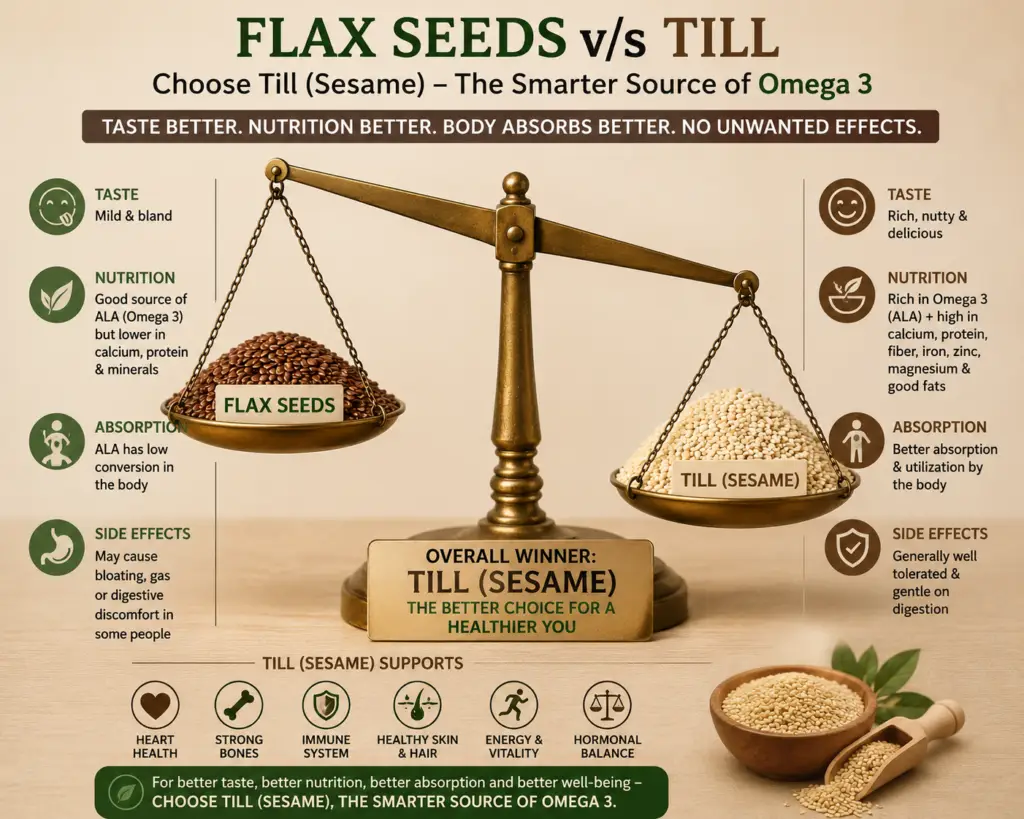
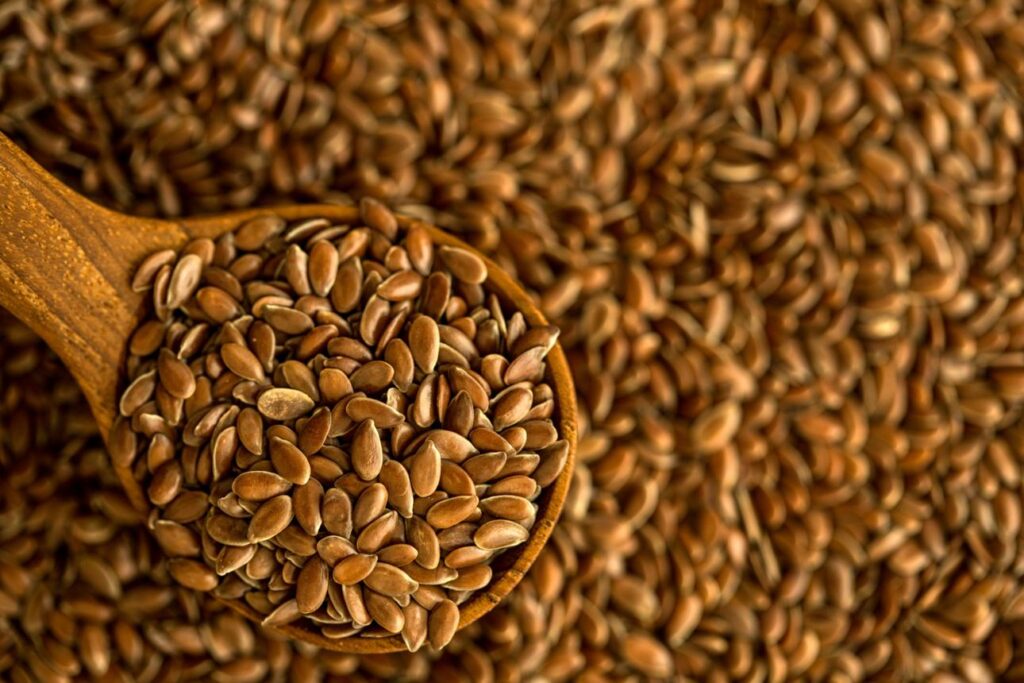
“Flax Seeds vs Till (Sesame): Why Till stands out as the smarter choice for better taste, nutrition, absorption, and overall wellness.”
In today’s nutrition world, Omega-3 fatty acids are often highlighted as essential for good health. Most people immediately think of flax seeds as the best plant source. That is true—but it is only part of the story.
The real question is: What works best in everyday Indian eating habits?
Flax Seeds — The Known Omega-3 Champion
Flax seeds are widely recognized because they are rich in ALA (Alpha-Linolenic Acid), a plant-based Omega-3 fatty acid.
Benefits of Flax Seeds:
High Omega-3 content
Supports heart health
Helps reduce inflammation
But there are practical limitations:
Needs to be powdered or crushed for absorption
Can turn bitter or rancid quickly
Not always easy to include daily in meals
Overconsumption may cause digestive discomfort
Til (Sesame) — The Practical Everyday Superfood
Til (sesame seeds) may not be as high in Omega-3 as flax seeds, but calling it “less important” would be a mistake.
Because health is not just about one nutrient—it’s about balance and usability.
Why Til is Powerful:
Contains healthy fats (Omega-6 + small Omega-3 support)
Rich in calcium, iron, magnesium
Loaded with antioxidants (sesamin, sesamol)
Naturally supports digestion
Easy to consume daily without preparation
In traditional Indian diets, til was consumed regularly—not as a supplement, but as a functional everyday food.
The Real Truth: Nutrition vs Practicality
Factor
Flax Seeds
Til (Sesame)
Omega-3 content
Very high
Moderate
Ease of use
Needs grinding
Ready to eat
Stability
Can spoil quickly
Naturally stable
Digestive support
Limited
Strong
Daily usability
Moderate
Excellent
Conclusion:
Flax seeds are nutrient-dense. Til is life-friendly. And what we consume daily and consistently matters more than occasional superfoods.
Ancient Wisdom Got It Right
Our ancestors didn’t isolate nutrients. They combined:
Til (sesame)
Natural sweeteners like jaggery
Digestive spices
This created a complete system: healthy fats, minerals, and digestive support all in one.
Modern Mistake
Today’s after-meal habits often include:
Sugar-coated mukhwas
Artificial flavours
Chemical additives
These offer taste—but no real benefit.
The Smart Shift: Functional Mukhwas
A well-designed mukhwas can be more than a mouth freshener. It can:
Aid digestion
Provide natural nutrients
Support daily wellness
This is where til plays a key role.
Introducing Remas Easy Digest Mukhwas
At Remas, we bring together tradition and practicality.
Why it stands out:
✅ Contains natural seeds including til (sesame)
✅ No artificial colours
✅ No chemical additives
✅ No unnecessary sugar overload
✅ Designed for daily use—not occasional health trends
In food, a similar truth applies: 👉 Half knowledge about “healthy ingredients” can harm your health. Today, many products in the market promote nuts, seeds, grains, and dry fruits as “super healthy.”
But here’s what most people don’t realize— ➡️ Wrong combinations can make even the healthiest foods harmful.